Can The Other Person’s Insurance Company Total My Car?
- thomascardwell8
- May 25
- 3 min read
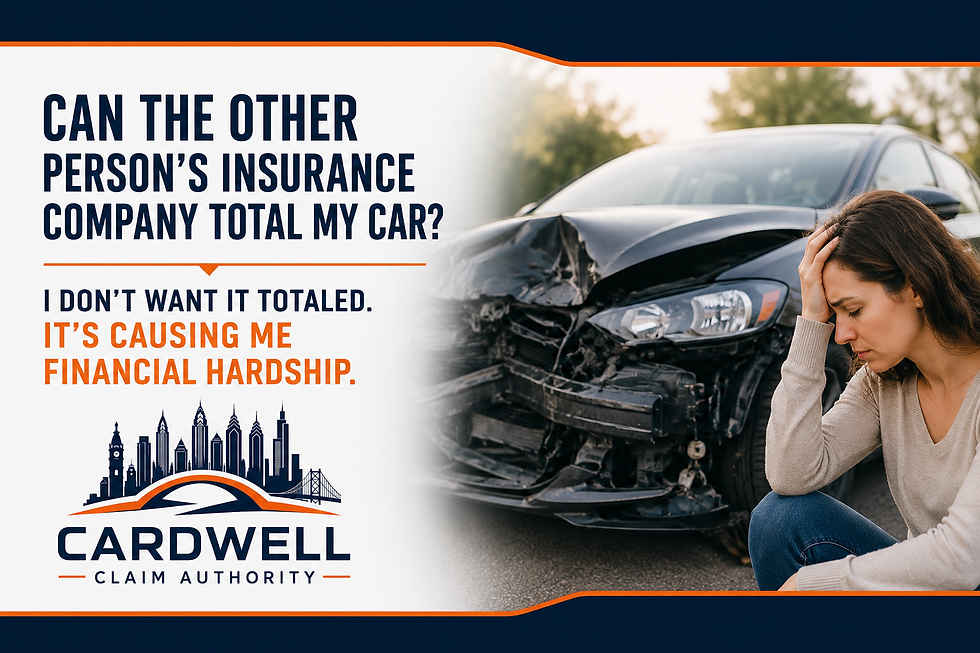
It Wasn’t My Fault — And I Don’t Want My Vehicle Totaled.
One of the most emotional moments during an insurance claim is hearing:
“Your vehicle has been declared a total loss.”
For many customers, the reaction is immediate:
“But it wasn’t my fault.”
“I don’t want my car totaled.”
“This is causing financial hardship.”
“I just want my vehicle repaired.”
These concerns are extremely common after an accident.
Can The Insurance Company Decide To Total My Vehicle?
In many situations:
yes.
The at-fault party’s insurance company may determine that the vehicle is:
uneconomical to repair
unsafe to repair
approaching state total loss thresholds
worth less than the anticipated repair cost and salvage value combined
Insurance companies typically evaluate:
repair cost estimates
supplemental damage
salvage value
vehicle market value
state regulations
structural or safety concerns
Why Would They Total A Repairable Vehicle?
Sometimes a vehicle may still appear:
drivable
repairable
cosmetically fixable
but still qualify as a total loss financially.
Modern vehicles are significantly more expensive to repair due to:
ADAS systems
sensors and cameras
calibration requirements
structural repair complexity
OEM repair procedures
parts costs
labor rates
Additional hidden damage discovered during teardown may also increase repair costs substantially.
What If I Don’t Agree With The Total Loss Decision?
In some situations:
customers may have options.
Depending on:
state laws
policy language
ownership status
lienholder involvement
insurance company procedures
there may be opportunities to:
review the valuation
dispute the settlement amount
evaluate comparable vehicles
seek an independent appraisal
discuss owner-retained salvage options
Every claim situation is different.
“It Wasn’t My Fault. Why Am I Being Forced Into This?”
This is often the hardest part emotionally.
For many customers:
their vehicle is familiar
paid off
customized
reliable
emotionally important
difficult to replace affordably
Even when the accident was not their fault:
the financial and logistical impact can still feel overwhelming.
This is especially true when:
replacement vehicle prices are high
interest rates have increased
loan balances exceed market value
rental coverage is limited
work or family transportation is affected
What Is Owner-Retained Salvage?
In some situations, customers may ask about:
keeping the vehicle after the total loss settlement.
This is commonly called:
owner-retained salvage.
Depending on:
state regulations
lienholder approval
vehicle damage severity
insurance company policies
the owner may be able to:
retain the vehicle
accept a reduced settlement
repair the vehicle independently
However:
salvage branding may apply
inspections may be required
financing restrictions may exist
future resale value may be affected
Can A Total Loss Value Be Reviewed?
Yes.
Sometimes customers have concerns regarding:
comparable vehicles used in the valuation
condition adjustments
mileage adjustments
missing options/packages
market availability
local vehicle pricing differences
A professional independent review may help identify:
valuation discrepancies
unsupported adjustments
comparable vehicle concerns
market inconsistencies
Financial Hardship Concerns Are Real
Many customers are not prepared for:
loan payoff issues
down payment requirements
increased replacement costs
GAP coverage concerns
transportation interruptions
This is one reason documentation and professional handling matter during the claim process.
You’ve already been through enough.
You don’t need chaos.
You need authority.
Professional Claim Handling Matters
Total loss situations are not simply about emotions or pressure.
They are about:
accurate market valuation
supportable documentation
clear communication
proper comparable vehicle analysis
objective claim handling
Professionals don’t scream louder.
Professionals build stronger cases.
Cardwell Claim Authority provides independent support for:
total loss disputes
appraisal clause matters
diminished value claims
partial loss disputes
professional valuation review


Comments