top of page
☎ 484-832-6305
✉ info@autoclaimauthority.com
📍 Appraisal Services Available Nation Wide!
What happens to my totaled vehicle?
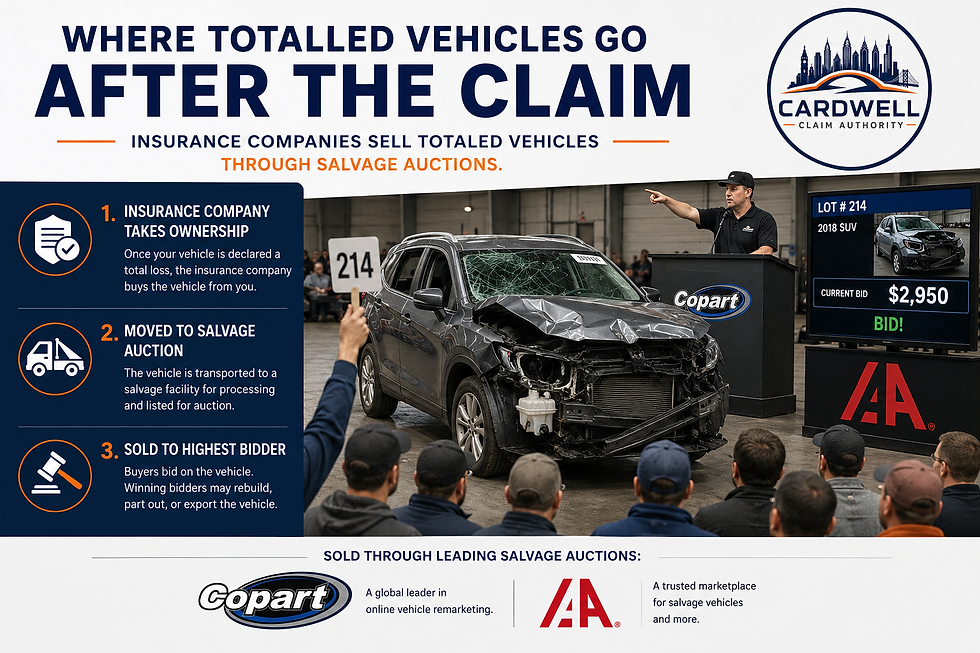
When a vehicle is declared a total loss and the settlement is finalized, the insurance company typically purchases the vehicle from the owner as part of the claim settlement.
Once ownership transfers, the vehicle becomes the property of the insurance company.
In most cases, the insurance company will arrange for the vehicle to be moved to a salvage facility such as Copart, IAA, or another salvage processing yard. The vehicle is then processed, evaluated for salvage value, and eventually sold through salvage auction channels.
Can I Keep My Totaled Vehicle?
In many cases, yes. This is commonly referred to as “owner retention” or “retaining the salvage.”
If you choose to keep the vehicle:
-
The insurance settlement will usually be reduced
-
The reduction reflects the salvage value the insurance company would have received if they sold the vehicle
-
You retain ownership of the vehicle instead of transferring it to the insurance company
This option is sometimes chosen when:
-
The owner wants to repair the vehicle
-
The vehicle has sentimental value
-
The owner wants to keep aftermarket parts or modifications
-
The vehicle may still have usable value
Important Things To Know About Retained Salvage
Retained total loss vehicles are often subject to:
-
Salvage title requirements
-
Rebuilt inspection requirements
-
DMV paperwork and disclosures
-
State-specific registration rules
-
Insurance eligibility limitations after repair
Rules and requirements vary significantly by state. Always check with your specific state DMV or motor vehicle agency regarding retained salvage laws, title requirements, inspections, and registration procedures.
Bottom Line
Once a vehicle is declared a total loss, the insurance company typically takes ownership and sells the salvage through companies such as Copart or IAA. However, in many cases, vehicle owners may have the option to retain the salvage and keep the vehicle, subject to settlement adjustments and state-specific requirements.
bottom of page